Walk down any sunscreen aisle and the options are overwhelming. "Natural." "Reef-safe." "Gentle." "Clean." These words are everywhere, and almost none of them are regulated. That means a sunscreen can slap "natural" on the label while still containing a long list of ingredients you'd probably prefer to keep off your child's skin.
As a parent, you shouldn't have to have a chemistry degree to choose a safe sunscreen. But knowing a few key things — what to look for, what to skip, and why it matters more for kids than adults — makes all the difference.
This is your no-fuss, dermatologist-backed guide to choosing the right sunscreen for your child, from babies as young as 6 months all the way through the school years.
Why Kids' Skin Needs Extra Attention
Children's skin isn't just adult skin in a smaller size. It's thinner, more permeable, and still developing its natural protective barrier. That means what you put on it gets absorbed more readily — and the cumulative effects over a lifetime start early.
Here's a number that should stay with every parent: about 23% of a person's lifetime UV exposure happens before the age of 18. And having more than five sunburns in a lifetime doubles the risk of melanoma. The habits you build now — putting SPF on your kids before they head outside, making it a non-negotiable part of any outdoor day — are genuinely protective for the rest of their lives.
The American Academy of Dermatology recommends that all children, regardless of skin tone, wear broad-spectrum sunscreen with SPF 30 or higher. Every single day. And for babies under 6 months, the recommendation is simple: keep them out of direct sunlight and use protective clothing, shade, and hats instead. Sunscreen is not approved for use on infants under 6 months old.
Once your baby reaches 6 months, sunscreen becomes your best friend. But not just any sunscreen — the right one.
What to Look For in a Kids' Sunscreen
1. Mineral formula (zinc oxide and/or titanium dioxide)
This is the single most important box to check. Mineral sunscreens — also called physical sunscreens — use zinc oxide and titanium dioxide as their active ingredients. These minerals sit on top of the skin and physically deflect UV rays rather than absorbing into the skin and converting them to heat.
Why does this matter for kids specifically? Because mineral sunscreens don't get absorbed into the bloodstream the way many chemical filters do. They work immediately upon application (no 15–30 minute wait required), and they're far less likely to irritate sensitive skin. Dermatologists overwhelmingly recommend mineral formulas for babies and children — and the FDA currently recognizes only two sunscreen ingredients as Generally Recognized as Safe and Effective (GRASE): zinc oxide and titanium dioxide.
For the cleanest, most protective option, look for non-nano zinc oxide specifically. "Non-nano" means the particles are large enough that they can't penetrate the skin, staying entirely on the surface where they do their job as a physical shield.
2. Broad-spectrum protection
The SPF number alone only tells you how well a sunscreen protects against UVB rays — the ones that cause sunburn. UVA rays, which penetrate deeper into the skin and are responsible for long-term aging and increased skin cancer risk, require separate coverage. "Broad-spectrum" on the label means you're protected against both. Never buy a kids' sunscreen without it.
3. SPF 30 at minimum, SPF 50 for active days
For everyday use, SPF 30 blocks approximately 97% of UVB rays. For longer outdoor days — beach trips, sports games, pool days — reach for SPF 50 or higher. No sunscreen blocks 100% of UV rays, which is why reapplication every two hours is non-negotiable regardless of SPF level.
4. Water resistance
Kids and water are inseparable. A water-resistant formula will maintain its protection for 40–80 minutes of water exposure, depending on the rating. Always reapply immediately after your child towels off — water-resistant doesn't mean waterproof, and toweling removes sunscreen even if it hasn't fully worn off yet.
5. Fragrance-free
Fragrance is one of the most common causes of skin irritation and allergic reactions in children. Fragrances — which can hide hundreds of undisclosed chemicals under the umbrella term "fragrance" or "parfum" on ingredient labels — are unnecessary in sunscreen and best avoided entirely for young, sensitive skin. If the sunscreen smells like coconuts or vanilla, double-check the label.
6. Easy application
This one matters more than parents give it credit for. The best sunscreen for your child is the one you'll actually use consistently — and use correctly. Formulas that are hard to apply, leave a heavy white cast, or require a lot of rubbing in are going to get skipped on the mornings when you're rushing out the door. Sticks, sprays, and lightweight crèmes that glide on quickly and absorb easily remove the friction from the routine.
What to Avoid in Kids' Sunscreen
This is where label reading really pays off. Here are the ingredients that raise the most concern, particularly for children:
Oxybenzone
This is the most significant chemical filter to avoid in kids' sunscreen. Oxybenzone is readily absorbed through the skin at levels that have raised concern among researchers, and studies have found it in human blood, urine, and breast milk after typical sunscreen use. The Centers for Disease Control found oxybenzone levels in people correlated directly with how much sunscreen they used. There is mounting evidence of its endocrine-disrupting properties — meaning it can interfere with the body's hormone function. It's also been banned in Hawaii and several other jurisdictions due to its devastating impact on coral reefs. The American Academy of Pediatrics suggests avoiding oxybenzone in children's sunscreen when possible.
Octinoxate
Another common chemical UV filter that has been linked to potential hormonal effects and environmental harm. Like oxybenzone, it's banned in Hawaii specifically because of reef toxicity. Studies have shown it can be absorbed through the skin and detected in blood.
Homosalate
A UV-absorbing chemical filter that has drawn concern from regulators in Europe, where the European Commission concluded it was not safe at concentrations up to 10% and recommended a maximum of just 1.4%. The U.S. currently allows concentrations up to 15%. Given the developing hormonal systems of children, this is an ingredient worth steering clear of.
Parabens
Parabens (look for methylparaben, propylparaben, butylparaben, ethylparaben on the label) are preservatives commonly used in cosmetics and sunscreens. They've been associated with hormone disruption due to their ability to mimic estrogen in the body. Many brands have moved away from them, but always check the label.
Fragrance / Parfum
As mentioned above: fragrance is a catch-all term that can legally mask hundreds of undisclosed chemical compounds, some of which are known allergens, hormone disruptors, or irritants. With children's sensitive skin, there's simply no reason to accept it.
Aerosol spray sunscreens
Spray sunscreens are tempting for their convenience, but for children specifically, the concern is inhalation. When you spray near a child's face or in windy conditions, there's a real risk of your child breathing in the formula. Non-aerosol pump sprays or sprays applied to your hands first and then rubbed onto the skin are a much safer option for kids.
Sunscreen by Age: A Quick-Reference Guide
Under 6 months: No sunscreen. The AAP recommends keeping infants out of direct sunlight entirely and using physical barriers — shade, hats, lightweight long sleeves, a stroller canopy. If sun exposure is unavoidable, consult your pediatrician.
6 months – 2 years: A mineral sunscreen with zinc oxide is your only option here. Choose fragrance-free, hypoallergenic formulas specifically designed for sensitive baby skin. Sticks are particularly easy to apply quickly on squirmy babies. SPF 40–50 is ideal.
Toddlers & preschoolers (2–5 years): Same mineral-only rule applies. Sticks and sprays make application faster for kids who don't want to stand still. Look for water-resistant formulas since this age group tends to be in and out of water constantly.
School-age kids (6+): Continue with mineral formulas. Consider portability — a stick that lives in their backpack means they can reapply at recess or sports practice without needing help.
Tweens & teens: Mineral is still best, but this is also the age where you might consider non-comedogenic formulas if acne is a concern. A tinted mineral sunscreen can double as a light coverage product for teens who are starting to care about their appearance.
The MDSolarSciences Kids Line: Built for This
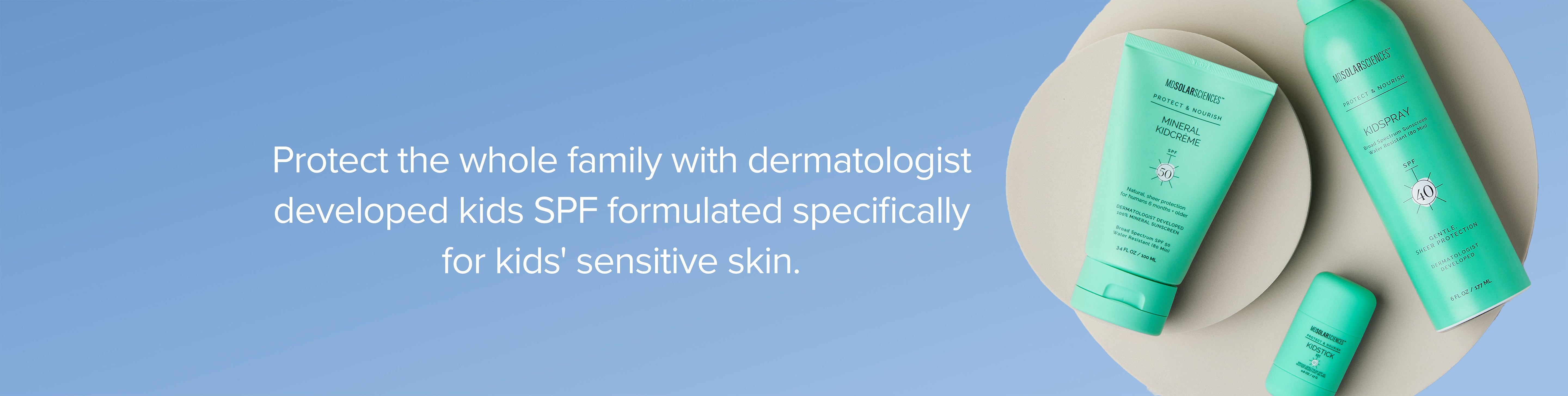
Here's what we recommend for every scenario:
For the playground and on-the-go: Mineral KidStick SPF 40
The fastest application in the kids' sunscreen game. Swipe it on in seconds — no rubbing required, no white cast, no mess. Fragrance-free and water-resistant, it fits in a diaper bag, a backpack, or your pocket. For any parent who has ever tried to apply lotion to a child who is already sprinting toward the slide, this stick is the answer.
Safe from 6 months+. Non-comedogenic. Reef-safe.
For full-body coverage: Mineral KidCrème SPF 50
A hypoallergenic, dermatologist-tested SPF 50 mineral lotion that provides serious broad-spectrum protection in a lightweight, non-greasy formula. Perfect for applying before you leave the house — on arms, legs, face, and neck — when you have a few extra minutes to do it right. The gentle formula is specifically designed for young, sensitive skin.
Hypoallergenic. Fragrance-free. Zinc oxide-based. Safe from 6 months+.
For beach days and pool days: KidSpray SPF 40
A non-aerosol pump spray that covers backs, shoulders, and legs quickly without wrestling a squirming child to the ground. No propellants, no harsh chemicals — apply to your hands first and smooth on, or spray at a slight distance for even coverage. Water-resistant and lightweight.
Non-aerosol. Broad-spectrum. Safe from 6 months+.
How to Apply Kids' Sunscreen Correctly
Even the best sunscreen only works if it's applied properly. Here's the breakdown:
How much: Use about one ounce (a full shot glass) for a child's whole body. Most people — adults and parents applying to kids — use about half of what they actually need. Be generous.
When: Apply 15 minutes before going outside. Mineral sunscreens work immediately on contact, but giving it time to settle ensures even coverage.
Where: Don't forget ears, the back of the neck, tops of feet, the part in the hair, and the backs of hands. These are the spots that get missed most often and burn the fastest.
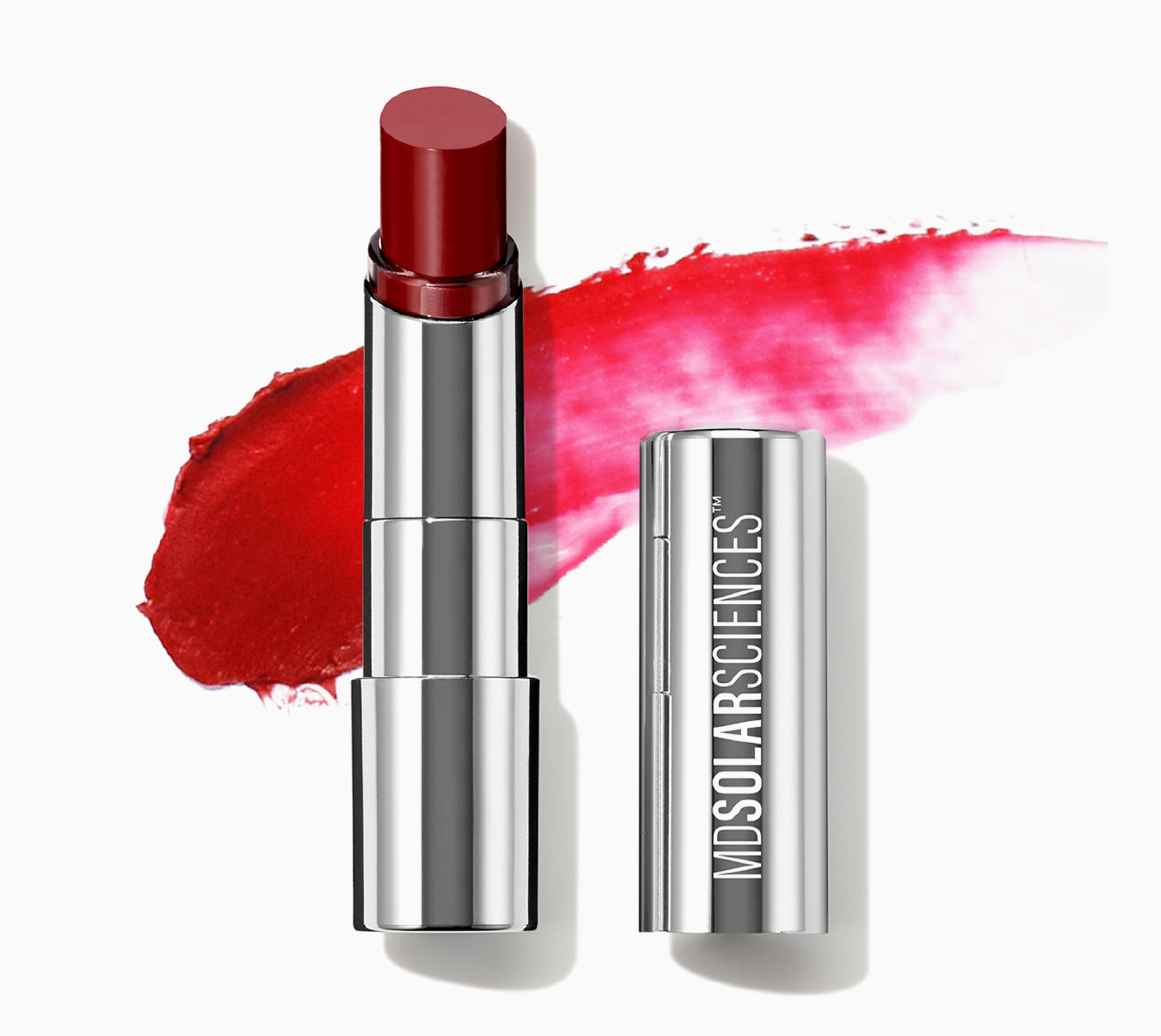
Lips: Children's lips need SPF too. An SPF lip balm is an easy add-on to any outdoor outing.
How often: Every two hours when outdoors. Every time your child gets out of the water or towels off. If they're sweating heavily, reapply sooner.
On cloudy days: Yes, still. Up to 80% of UV rays penetrate cloud cover. The UV index doesn't take a day off just because the sky is grey.
The Bottom Line for Parents
Choosing a sunscreen for your child doesn't have to be complicated — it just requires knowing what to look for and what to leave on the shelf. The short version: go mineral, go fragrance-free, go broad-spectrum, and go SPF 30 or higher. Check the label for oxybenzone,parabens, and fragrance — and put it back if you find them.
The habit of daily SPF starts young. Building it into your family's outdoor routine now — sunscreen before shoes, before you leave the house, before anything else — is one of the most protective things you can do for your child's long-term skin health.
At MDSolarSciences, our entire Kids line was developed with exactly this in mind: clean, formulas that are gentle enough for the most sensitive skin, fast enough for the most impatient kids, and effective enough to give parents real peace of mind.