The Biggest Sunscreen Myth: SPF Is a Summer Product
It isn't.
We know it feels that way. The marketing, the beach imagery, the "stock up for summer" messaging, all of it has trained us to think of sunscreen as a warm-weather accessory, like sandals or a wide-brimmed hat. Something you reach for when the sun is blazing and you're heading to the pool.
But UV radiation doesn't follow the calendar. It doesn't pack up in September and come back in June. And the damage it causes: premature aging, hyperpigmentation, DNA damage, and skin cancer risk accumulates every single day, every single season, whether you feel it or not.
Fall is actually one of the most important times to have this conversation. Because this is exactly when people stop.
What UV Radiation Actually Does Year Round
To understand why year-round SPF matters, you need to understand the two types of UV rays and how they behave differently across the seasons.
UVB Rays are the rays responsible for sunburn. They're strongest in summer and at high altitudes, and they do vary with the seasons, you're less likely to burn on a December afternoon than a July one. UVB is what most people think about when they think about sun protection.
UVA Rays are the real year-round threat. UVA rays account for up to 95% of the UV radiation that reaches the earth's surface. They penetrate deeper into the skin than UVB (reaching the dermis where collagen and elastin live) and they are responsible for the majority of visible skin aging, hyperpigmentation, and long-term DNA damage.
Here's the critical part: UVA levels remain relatively constant throughout the year. The sun may feel less intense in October than in July, but your UVA exposure is nearly the same. The wrinkles, the dark spots, the loss of elasticity that damage is happening 365 days a year.
7 Reasons to Wear SPF All Year Long
1. UVA Rays Don't Take a Season Off
As we just covered — UVA radiation is essentially constant year-round. The "it's not sunny enough to need sunscreen" logic only applies to UVB (sunburn). For the aging, pigmentation, and long-term skin cancer risk driven by UVA, every day counts. Every commute. Every errand. Every Zoom call by a window.
2. Clouds Don't Block UV Radiation
Up to 80% of UV rays pass right through cloud cover. That overcast October sky? Still delivering a significant dose of UV radiation to your unprotected skin. One of the most common times people get burned is on cloudy days — precisely because they skipped their SPF.
3. Your Car Window Is Not Protection
UVA rays penetrate glass. Your windshield offers some protection, but your side windows typically do not block UVA at all. If you commute, drive to school pickup, or sit near a window at the office, your skin is receiving consistent UV exposure — one side of your face more than the other, over years and decades. Dermatologists see this asymmetry in their offices every day.
4. Fall and Winter Activities Increase UV Exposure
Heading to a pumpkin patch? Apple picking? A fall hike? Skiing in the winter? Outdoor UV exposure doesn't end with summer. In fact, some fall and winter activities come with amplified UV risk:
- High altitude — UV intensity increases approximately 8-10% for every 1,000 meters of elevation. Ski trips mean significantly elevated UV exposure.
- Snow reflection — fresh snow reflects up to 80% of UV radiation, nearly doubling your exposure compared to being on flat ground.
- Leaf peeping road trips — hours in the car with sun coming through windows adds up quickly.
5. SPF Is the #1 Anti-Aging Ingredient
Dermatologists are unanimous: daily broad spectrum SPF is the single most effective anti-aging product in existence.
Studies estimate that up to 90% of visible skin aging: fine lines, wrinkles, dark spots, sagging, loss of radiance is caused not by the natural aging process but by cumulative UV exposure. The skin you'll have in your 50s, 60s, and 70s is being shaped by what you do today. Every day you protect your skin is a deposit into a long-term account. Every day you skip is a withdrawal.
Fall is not the time to pause that investment. It's the time to double down.
6. Your Hyperpigmentation Will Get Worse Without It
If you struggled with dark spots, melasma, or post-acne marks this summer, here's the hard truth: UV exposure is the number one factor that makes hyperpigmentation worse. Even on a cloudy fall day, unprotected UV exposure can deepen existing pigmentation and slow the fading process significantly.
If you're using brightening serums, vitamin C, or retinol to address pigmentation, all of that work is being undermined every time you step outside without SPF. Those actives make your skin more photosensitive, not less. Fall and winter are when people typically introduce retinol into their routines. SPF is non-negotiable alongside it.
7. Skin Cancer Doesn't Take a Season Off Either
Skin cancer is the most common cancer in the United States. One in five Americans will develop skin cancer in their lifetime. And while summer beach days get most of the attention, the cumulative UV exposure that drives skin cancer risk is built up over a lifetime every day, every season, every decade.
The most effective thing you can do to reduce your skin cancer risk is also the simplest: wear broad spectrum SPF every single day. Not just in June. Every day.
The Fall Routine Reset: What to Use
Fall is actually the perfect time to reassess your SPF routine. As the weather changes and your skin's needs shift (typically toward more hydration and less oil control) your SPF formula might shift too.
Here's what to look for in a year-round daily SPF:
Hydrating formula — as temperatures drop and indoor heat increases, skin tends to get drier. Look for SPF formulas that double as moisturizers, with ingredients like hyaluronic acid, ceramides, and glycerin.
Broad spectrum protection — meaning protection against both UVA and UVB rays. Non-negotiable, year-round.
SPF 30 or higher — dermatologists recommend SPF 30 as the daily minimum. SPF 50 for higher-risk skin or more time outdoors.
Lightweight, wearable texture — the best SPF is the one you'll actually use every day. If it feels heavy, greasy, or leaves a white cast, you'll skip it. Choose a formula that feels like skincare, not an afterthought.
The MDSolarSciences Year-Round Lineup
At MDSolarSciences, every formula was developed by dermatologists with daily, year-round wear in mind. Because we've always believed that the best sunscreen is the one that feels good enough to actually wear — every morning, every season, without exception.
For your face — daily protection:
- Daily Perfecting Moisturizer SPF 30 — your moisturizer and your SPF in one step. Hyaluronic acid, niacinamide, and broad spectrum SPF 30 for the whole year.
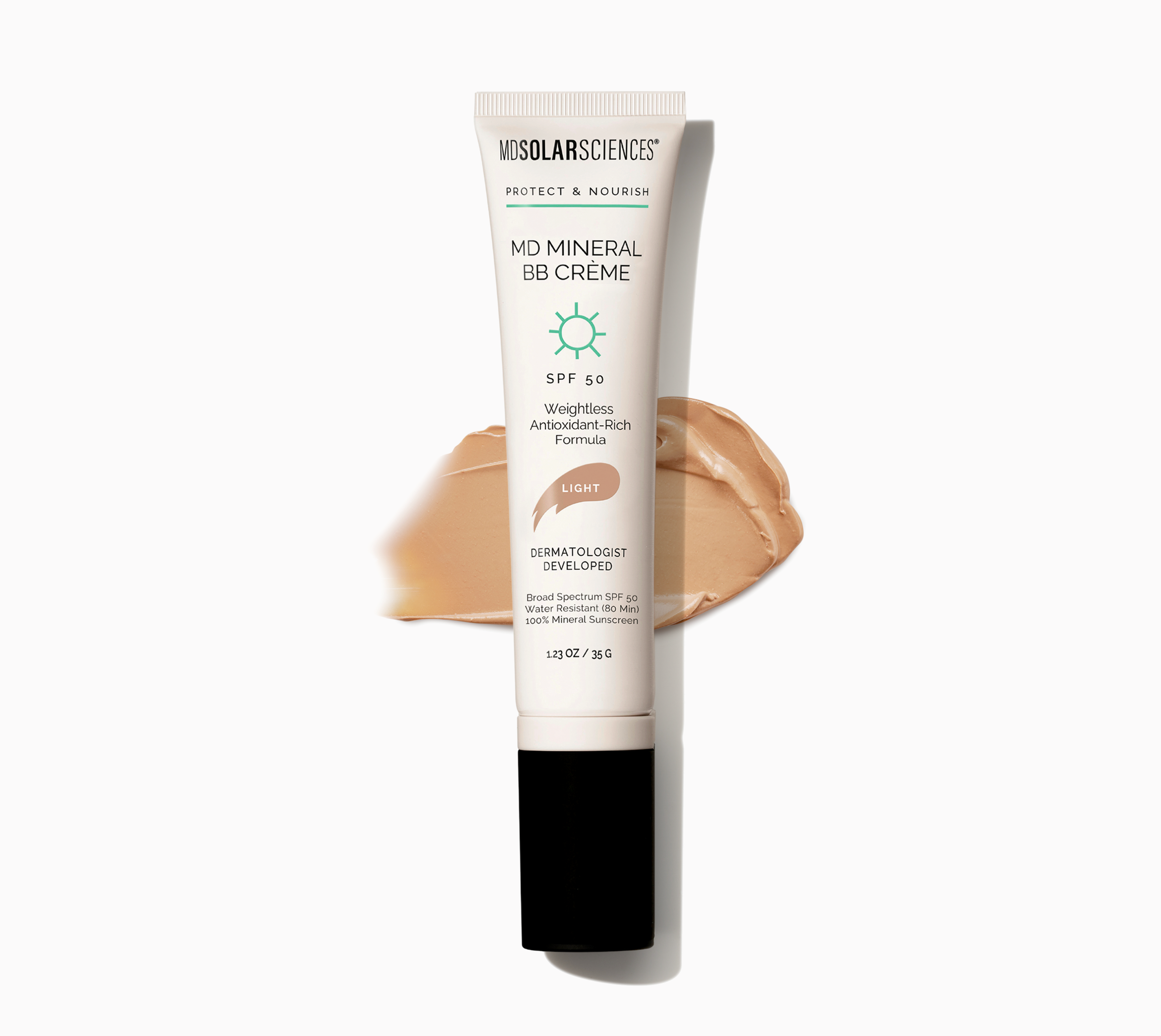
- Mineral Crème SPF 50 — lightweight, non-greasy, sensitive skin-friendly. The daily SPF that disappears into skin.
- Mineral Tinted Crème SPF 30 — sheer tinted coverage with broad spectrum SPF 30. Your makeup and your SPF, combined.
- Gleam + Glow SPF 50 — for the days you want radiance with your protection. Ceramides, niacinamide, and Snow Mushroom for all-day hydration.
For your body:
- Quick Dry Body Spray SPF 40 — non-aerosol, broad spectrum mineral protection. Fast, easy, no excuses — year-round.
For the whole family:
- Mineral KidCrème SPF 50 — safe from 6 months+, gentle for sensitive skin, water resistant up to 80 minutes.
- Mineral KidStick SPF 40 — one swipe, no mess, no meltdown. For faces, ears, and noses year-round.
Make It a Habit, Not a Season
The shift from thinking about SPF as a summer product to thinking about it as a daily non-negotiable — like brushing your teeth or taking your vitamins — is one of the most powerful things you can do for your long-term skin health.
Your skin doesn't know what month it is. UV radiation doesn't check the calendar. And the damage it causes doesn't care whether you were at the beach or walking to your car on a rainy Tuesday in November.
Wear your SPF. Every day. Every season. Your future skin is counting on it.
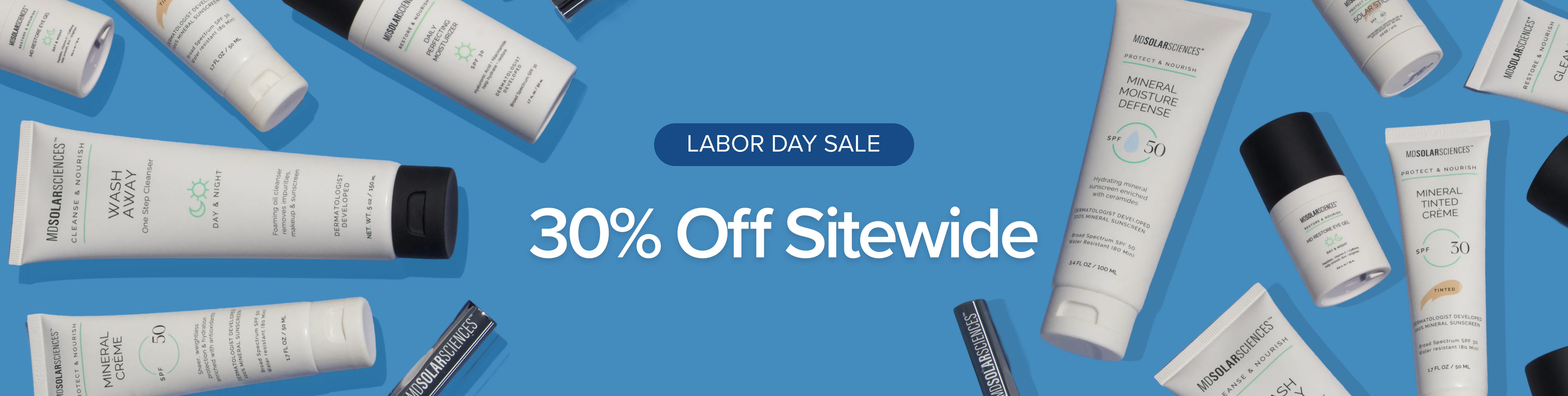
👉 Shop MDSolarSciences year-round SPF at mdsolarsciences.com — and right now, enjoy 30% off sitewide during our Labor Day sale.
MDSolarSciences formulas are dermatologist-developed, broad spectrum, reef safe, and cruelty free. Available at Nordstrom, Sephora, Ulta, and mdsolarsciences.com. Select products are HSA/FSA eligible.